Cyberbullying prevention for teams: a 2026 guide
Cyberbullying prevention for teams is defined as the intentional process of establishing clear policies, building respectful digital communication habits, and enabling confidential reporting to protect team wellbeing and productivity. In workplace settings, the industry term is “digital workplace harassment prevention,” and it covers everything from offensive messages on Slack to deliberate exclusion from group channels. This is not a fringe concern. Cybercompassconsulting works with organisations across Australia to address exactly this gap, where digital conduct policies exist on paper but rarely shape how people actually behave online. The cost of ignoring it shows up in team morale, staff turnover, and the quiet erosion of trust.
What is cyberbullying prevention for teams, and why does it matter?
Cyberbullying prevention for teams is a structured approach to stopping repeated, harmful digital behaviour before it damages people and culture. It combines written policy, leadership behaviour, and reporting systems into one coherent effort. Without all three working together, even well-intentioned organisations find themselves reacting to crises rather than preventing them.
The stakes are real. Workplace cyberbullying includes behaviours like sending threatening messages, spreading rumours through group chats, excluding colleagues from digital workspaces, and using offensive emojis to demean. These acts cause genuine psychological harm. They also cost organisations through absenteeism, reduced performance, and legal exposure.

Cybercompassconsulting draws on over 35 years of experience in behavioural science and digital safety to help teams move beyond compliance checklists. The goal is a workplace where respectful digital communication is the norm, not the exception.
What are the core elements of effective cyberbullying prevention policies?
A prevention policy is only as strong as its specificity. Vague language like “treat colleagues with respect” does not tell anyone what is actually prohibited. Effective policies name the behaviours, the platforms, and the consequences.
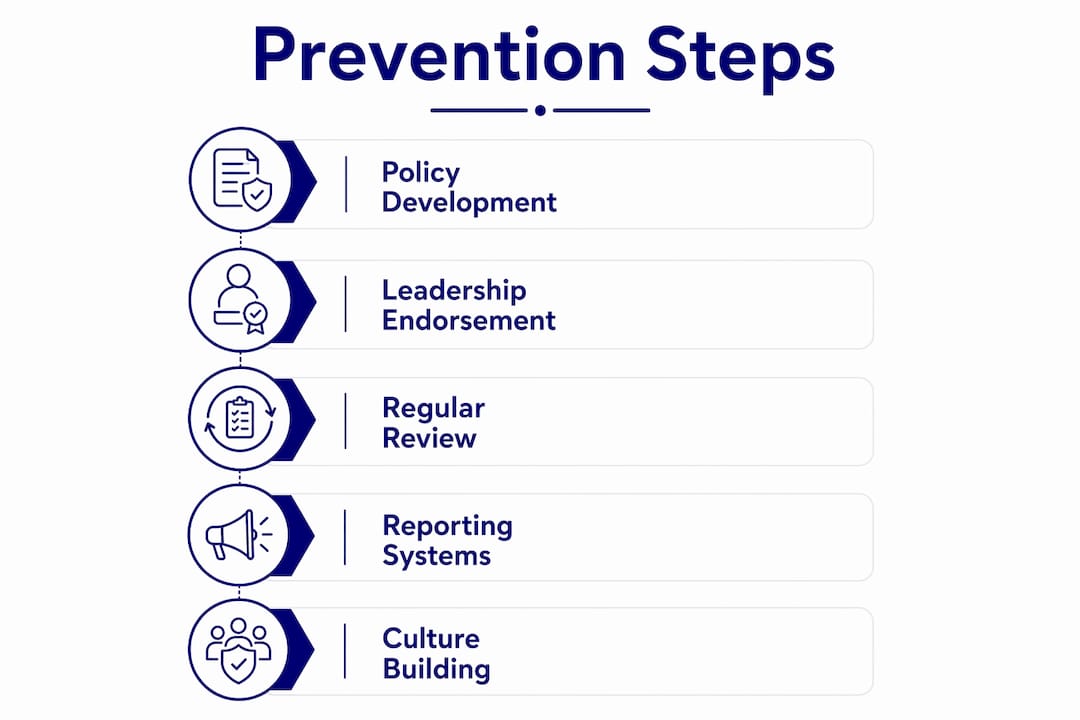
Industry best practice as of 2026 identifies five non-negotiable policy components:
Clear definitions with examples. Name specific behaviours: hostile direct messages, exclusion from work channels, public shaming in group threads, and misuse of reaction emojis to mock colleagues.
Platform and time scope. After-hours digital conduct on work platforms carries the same consequences as conduct during business hours. The policy must say this explicitly.
Confidential reporting channels. Offer at least two options, including one anonymous pathway. A single HR email address is not enough.
Investigation process and timelines. Employees need to know what happens after they report, and how long it will take. Ambiguity breeds distrust.
Anti-retaliation protections and consequences. State clearly that retaliation against a reporter is itself a disciplinary offence.
Signed executive endorsement is not optional. When senior leaders visibly back the policy, teams take it seriously. Without that sign-off, the document sits in a shared drive and changes nothing.
Pro Tip: Schedule a policy review every 12 months. Digital communication tools evolve quickly, and a policy written for email in 2022 will not cover the conduct risks on modern collaboration platforms.
How can team leaders build a respectful digital culture?
Most managers treat cyberbullying as a technical or HR problem. The research is clear: successful prevention requires culture-building and active leadership modelling. A policy document cannot do this work. A leader’s daily behaviour can.
Here is a practical framework for team leaders:
Model the standard you expect. Use clear, respectful language in every message. Avoid sarcasm in written form, where tone is easily misread. Your team watches how you communicate more than they read what you write in a policy.
Create a team digital agreement collaboratively. Rather than handing down rules, build a digital code of conduct with your team. Agreements people help create have stronger adherence than rules imposed from above.
Name microaggressions early. Cyberbullying in teams is often subtle at first, including offensive emojis, exclusion from channels, or consistently ignoring someone’s contributions in group chats. Addressing these early prevents escalation.
Hold regular open conversations. Dedicate time in team meetings to discuss digital communication norms. Ask directly: “Is there anything about how we communicate online that feels uncomfortable?” This signals psychological safety.
Promote peer accountability, not surveillance. The goal is a team that holds itself to a shared standard, not a manager watching every message. Peer responsibility scales in ways that top-down monitoring never will.
Pro Tip: When a team member raises a concern about digital conduct, respond within 24 hours. Delayed responses signal that the issue is not taken seriously, which discourages future reporting.
What systems support confidential reporting and swift response?
Fear of retaliation is the primary reason workplace cyberbullying goes unreported. Underreporting persists until organisations provide clear, protected, and genuinely accessible reporting mechanisms. Building those mechanisms is not complicated, but it requires deliberate design.
Effective reporting systems share these features:
Multiple channels. Offer a dedicated email address, an anonymous online form, and a named contact outside the direct management chain. Some teams also use third-party reporting platforms.
Documented timelines. Tell employees exactly when they will receive an acknowledgement and when they can expect an update. Silence after a report is corrosive.
Manager training on disclosure. Managers who receive a report need to know how to respond sensitively, maintain confidentiality, and avoid actions that could constitute retaliation.
Digital evidence guidance. Immediate screenshot capture is critical. Digital evidence is transient. Messages get deleted. Train your team to preserve evidence before reporting, not after.
The table below outlines the key components of a reporting system and what each one achieves.
Component | Purpose |
Anonymous reporting channel | Removes fear of identification and increases report rates |
Documented investigation timeline | Builds trust and reduces anxiety after a report is made |
Manager disclosure training | Prevents mishandling that could worsen the situation |
Evidence preservation guidance | Secures proof before it is deleted or altered |
Anti-retaliation policy clause | Protects reporters and encourages others to come forward |
Cybercompassconsulting helps organisations design these systems as part of a broader corporate cyber wellness programme, integrating behavioural science with practical reporting architecture.
What does the evidence show about prevention programme effectiveness?
The research on cyberbullying prevention programmes is more specific than most managers realise. A meta-analysis of 44 randomised controlled trials involving 65,707 participants across 15 countries found that programmes lasting at least 5 hours produced statistically significant reductions in both perpetration and victimisation. Effects were sustained for at least six months after the programme ended.
That finding matters for how you design team training. A single one-hour workshop does not move the needle. Sustained, structured programmes do.
“Intervention programs lasting at least 5 hours significantly reduce cyberbullying perpetration and victimisation, with effects sustained for 6 months across diverse populations and contexts.” Meta-analysis of 44 randomised controlled trials, 65,707 participants, 15 countries
The same research identified factors that influence programme success: leadership buy-in, integration into existing team culture, and follow-up reinforcement. A programme dropped into a team with no cultural groundwork produces weaker results. This is why Cybercompassconsulting pairs training with culture assessment and policy development, rather than offering standalone workshops.
For team leaders, the practical implication is straightforward. Invest in programmes that run across multiple sessions. Build in reinforcement activities between sessions. Measure outcomes at the six-month mark, not just immediately after delivery.
Key takeaways
Effective cyberbullying prevention for teams requires clear policies, active leadership, accessible reporting systems, and sustained training programmes working together.
Point | Details |
Policy specificity matters | Name exact behaviours, platforms, and consequences rather than relying on vague respect clauses. |
After-hours conduct is in scope | Policies must explicitly cover work-related digital communication outside business hours. |
Culture beats compliance | Leaders who model respectful digital behaviour reduce incidents more effectively than policies alone. |
Anonymous reporting increases disclosure | Providing multiple channels, including anonymous options, counteracts fear of retaliation. |
Programme duration drives results | Interventions of at least 5 hours produce sustained reductions in cyberbullying for six months or more. |
What I have learned about leading digital culture change
I have worked alongside team leaders who genuinely care about their people and still miss the early signs of digital harm. Not because they are inattentive, but because the signs are easy to rationalise. An eye-roll emoji. A colleague quietly dropped from a group chat. A message thread that goes cold when one person joins. These feel minor until they do not.
The biggest mistake I see is treating prevention as a one-time policy exercise. Leaders write the document, circulate it once, and consider the job done. But a policy without culture is just paper. The teams that genuinely reduce cyberbullying are the ones where the leader talks about digital respect openly, models it visibly, and responds to small concerns before they become formal complaints.
There is also a real tension between monitoring tools and trust. Technology can flag patterns, but it cannot replace human judgement. I have seen teams where surveillance tools created more anxiety than the bullying they were meant to prevent. The answer is not more monitoring. It is a team digital agreement built collaboratively, where people understand the norms because they helped create them.
My honest view is that the future of prevention sits with leaders who are willing to own digital culture as part of their leadership identity, not outsource it to HR or IT. That shift is uncomfortable for some. It is also the only thing that works.
— Jemma
How Cybercompassconsulting supports teams with prevention and digital wellness
Cybercompassconsulting works directly with team leaders and managers to build cyberbullying prevention strategies that hold up in practice, not just on paper.
The corporate cyber wellness services cover policy development, leadership training, culture assessment, and confidential reporting system design. Each engagement is tailored to the team’s size, communication platforms, and existing culture. Virtual consultations make it straightforward to get started without disrupting your team’s schedule. If you are ready to build a prevention approach that actually changes behaviour, book a consultation and take the first practical step.
FAQ
What is cyberbullying in a workplace team context?
Workplace cyberbullying is defined as repeated, harmful digital behaviour directed at a colleague through platforms like Slack, Teams, or email. It includes hostile messages, exclusion from group channels, and public humiliation in shared digital spaces.
How long does a cyberbullying prevention programme need to be?
Research shows programmes lasting at least 5 hours produce significant, sustained reductions in cyberbullying. Effects hold for at least six months, making multi-session programmes far more effective than single workshops.
What should a cyberbullying reporting system include?
An effective system includes at least two reporting channels (one anonymous), documented investigation timelines, anti-retaliation protections, and manager training on handling disclosures sensitively.
Does after-hours digital conduct fall under workplace policy?
Yes. Best practice policies explicitly cover work-related digital communications outside business hours. Conduct on work platforms carries the same consequences regardless of the time it occurs.
How can team leaders reduce cyberbullying without relying on surveillance?
Leaders reduce cyberbullying most effectively by modelling respectful digital communication, co-creating team digital agreements, and addressing minor digital incivility early before it escalates into serious harassment.
Recommended
Comments