What is digital citizenship: a guide for parents and educators
Digital citizenship is defined as the safe, responsible, and ethical use of digital technology across nine core areas, including access, communication, literacy, and security. It is not simply about knowing how to use a device. It is about understanding how to behave well, think critically, and stay safe in online spaces. For parents and educators, grasping what digital citizenship means is the first step toward raising young people who can navigate the internet with confidence and integrity.
What is digital citizenship and why does it matter?
Digital citizenship and digital citizenship education are two distinct things. The first describes how a person actually behaves online. The second is the structured teaching that builds those behaviours over time. Simply handing a child a tablet does not make them a good digital citizen, any more than handing them a car key makes them a safe driver.
The nine core areas of digital citizenship cover the full picture of online life. They include digital access, digital commerce, digital communication, digital literacy, digital etiquette, digital law, digital rights and responsibilities, digital health and wellness, and digital security. Each area addresses a different way that people interact with technology and with each other online. Together, they form a framework that schools, families, and organisations can use to guide behaviour and build skills.
Understanding this framework matters because the risks are real. Cyberbullying, misinformation, privacy breaches, and online exploitation are not abstract threats. They affect children and adults every day. A clear digital citizenship definition gives parents and educators a shared language to talk about these risks and a practical structure to address them.

What are the nine pillars of digital citizenship?
The nine pillars each address a specific dimension of online life. The table below summarises what each one covers and why it matters in practice.
Pillar | What it covers |
Digital access | Fair and equal opportunity to use technology and the internet |
Digital commerce | Safe buying, selling, and financial transactions online |
Digital communication | Choosing appropriate tools and tone for online interaction |
Digital literacy | Evaluating and creating digital content critically and responsibly |
Digital etiquette | Respectful behaviour and awareness of others in online spaces |
Digital law | Understanding legal rights and consequences of online actions |
Digital rights and responsibilities | Knowing your entitlements and obligations as an online participant |
Digital health and wellness | Managing screen time, mental health, and physical wellbeing |
Digital security | Protecting personal data, devices, and accounts from harm |
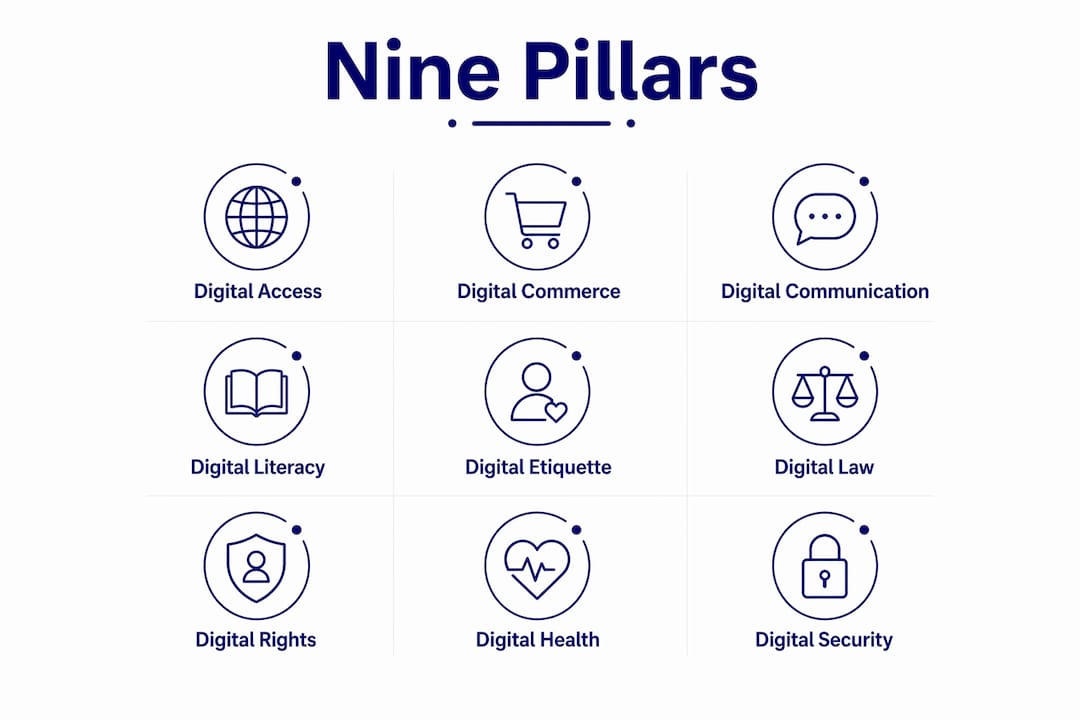
No single pillar is more important than the others. A child who is technically literate but ignores digital etiquette can still cause real harm. A teenager who understands digital law but neglects digital security remains vulnerable. The strength of digital citizenship comes from addressing all nine areas together, not in isolation.
Why is teaching digital citizenship critical for children?
Structured digital citizenship curricula for students aged 5–18 reduce the risks of cyberbullying and misinformation and improve confidence and behaviour online. That outcome does not happen by accident. It requires deliberate, age-appropriate teaching that builds on itself year after year.
The risks children face online are serious and growing. Consider what young people encounter without guidance:
Cyberbullying that follows them from school into their bedrooms
Algorithmically served content that amplifies anger, anxiety, or harmful ideologies
Misinformation shared by friends and family that looks credible
Privacy settings they have never been taught to use
Predatory advertising and data collection they cannot recognise
Each of these risks has a corresponding skill that digital citizenship education builds. Teaching children to verify sources before sharing addresses misinformation. Teaching them about digital habits and safety addresses privacy and security. Teaching empathy and respectful communication addresses cyberbullying.
Effective digital citizenship education is a year-round, spiralled approach that embeds concepts from kindergarten through high school, adapting to age and technology use. A one-off workshop in Year 7 is not enough. Children need repeated, relevant exposure to these ideas as their technology use evolves.
Pro Tip: Weave digital citizenship into existing subjects rather than treating it as a standalone topic. A history lesson on propaganda is a natural entry point for media literacy. A science class on data is a perfect moment to discuss privacy.
What are practical examples of digital citizenship in action?
Examples of digital citizenship include reporting cyberbullying, verifying sources before sharing, practising password safety, and maintaining respectful communication online. These are not abstract ideals. They are specific, teachable behaviours that children and adults can practise every day.
Here are concrete examples you can recognise and reinforce at home or in the classroom:
Pausing before sharing a news story and checking whether the source is credible
Using a strong, unique password for each account and enabling two-factor authentication
Reporting a hurtful comment or post rather than ignoring it or retaliating
Asking permission before tagging someone in a photo or sharing their personal information
Recognising when screen time is affecting sleep or mood and choosing to log off
Treating online conversations with the same respect you would expect face to face
One example worth expanding on is source verification. Children are surrounded by content that looks authoritative but is not. Teaching them to ask three questions before sharing anything, “Who created this?”, “What evidence supports it?”, and “Why was it published?”, builds a habit that protects them and the people around them. This is digital literacy in its most practical form.
Adults modelling these behaviours is equally powerful. When a parent fact-checks an article at the dinner table, or a teacher acknowledges uncertainty and looks something up, they demonstrate that critical thinking is normal and valued.
Pro Tip: Co-create a set of online norms with your children or students rather than handing them a list of rules. When young people help write the expectations, they are far more likely to follow them.
How can parents and educators promote responsible digital citizenship?
Co-creating Digital Citizenship Charters with students or families promotes ownership and accountability, and improves the online environment more effectively than adult-imposed rules. This is a practical starting point for any household or classroom.
Here is a step-by-step approach that works across both settings:
Start a conversation, not a lecture. Ask children what they enjoy online and what makes them uncomfortable. Listen before you advise.
Build a Digital Citizenship Charter together. Write down agreed norms for screen time, communication, and content. Display it somewhere visible.
Embed digital citizenship into daily routines. Discuss a news story at breakfast. Review privacy settings together on a Sunday afternoon. Make it ordinary, not exceptional.
Balance online and offline time intentionally. Set boundaries that protect sleep, physical activity, and face-to-face relationships without framing technology as the enemy.
Teach critical engagement with algorithms. Help children understand that the content they see is algorithmically curated to keep them engaged, not necessarily to inform or benefit them.
Stay current. Digital environments change fast. Revisit your family or classroom norms regularly as new platforms and risks emerge.
The ISTE+ASCD DigCit Coalition emphasises positive modelling over fear-based approaches. Telling children what not to do creates anxiety. Teaching them what to do builds confidence. That shift in framing changes everything.
For families wanting structured support, resources like internet safety guides for families and school-based cyber wellness programmes offer practical, evidence-based frameworks that go beyond generic advice.
Key takeaways
Digital citizenship is a learnable set of behaviours, not a fixed trait, and structured education across all nine pillars is the most effective way to build it in children and young people.
Point | Details |
Clear definition matters | Digital citizenship covers nine pillars from access to security, giving families and schools a shared framework. |
Education beats access alone | Simply giving children devices does not build responsible behaviour. Structured, age-appropriate teaching does. |
Practical examples are teachable | Verifying sources, reporting cyberbullying, and using strong passwords are specific skills children can learn and practise. |
Co-creation builds ownership | Charters and norms developed with children are more effective than rules handed down by adults. |
Embed it, don’t isolate it | Year-round integration across subjects builds deeper skills than one-off workshops or single lessons. |
Digital citizenship education: what I’ve learned after years in this field
I’ve sat with enough parents and teachers to know that most of them feel behind. The technology moves faster than the guidance. The platforms change before the lesson plans do. And underneath all of it is a quiet fear that they are not doing enough to protect the children in their care.
What I’ve come to believe, after years working in cyber wellness, is that the goal is not to make children afraid of the internet. It is to make them thoughtful about it. There is a real difference between a child who avoids TikTok because their parents banned it and a child who understands why certain content makes them feel worse about themselves and chooses to step away. The second child has a skill. The first just has a rule that will eventually stop working.
Teaching digital citizenship embedded across subjects and grades leads to more natural integration and deeper understanding than isolated lessons. I’ve seen this play out in schools that weave media literacy into English, data ethics into maths, and online communication into PDHPE. The students in those schools talk about these ideas fluently. They own them.
The hardest part is the AI piece. We are now asking children to think critically about content environments that are designed by some of the most sophisticated engineers in the world to be maximally engaging. That is not a fair fight without education. The children who will navigate it well are the ones who have been taught to ask, “Why am I being shown this?” That question is the whole game.
— Jemma
How Cybercompassconsulting supports digital citizenship education
Cybercompassconsulting works with schools, families, and organisations to build cyber wellness cultures grounded in behavioural science and practical education. The approach goes well beyond compliance checklists.
For schools, the Cyber Wellness School Programme offers virtual consultations and tailored plans that embed digital citizenship across the school community, from classroom lessons to staff training and parent engagement. For families, personalised coaching helps parents have the right conversations at the right time, building household norms that actually stick. With over 35 years of experience in cyber safety and human behaviour, Cybercompassconsulting brings depth and care to every engagement. Book a consultation to find out what the right programme looks like for your school or family.
FAQ
What is the digital citizenship definition in simple terms?
Digital citizenship is the safe, responsible, and ethical use of technology, covering nine areas from digital access and communication to security and wellness. It describes how people behave online, not just what tools they use.
Why teach digital citizenship in schools?
Structured digital citizenship education reduces cyberbullying and misinformation risks and builds confidence in students aged 5–18. A year-round, spiralled approach produces deeper and more lasting skills than one-off lessons.
What are some everyday examples of digital citizenship?
Practical examples include verifying a news story before sharing it, using strong passwords, reporting cyberbullying, and communicating respectfully in online spaces. These are specific, teachable behaviours that children can practise daily.
How does digital citizenship relate to online safety?
Digital citizenship includes online safety as one of its nine pillars, specifically digital security, but it also covers broader skills like critical thinking, empathy, and legal awareness. Together, these skills create a more complete picture of responsible online participation.
At what age should digital citizenship education begin?
Digital citizenship education works best when it starts in kindergarten and builds progressively through high school, adapting content to each developmental stage. Early exposure to concepts like respectful communication and privacy builds a foundation for more complex skills later.
Recommended
Comments