What is cyberbullying: a guide for parents and educators
Cyberbullying is defined as repeated, intentional aggressive behaviour conducted through digital devices to harm a victim who struggles to defend themselves. It happens across social media, messaging apps, and gaming platforms, and it does not stop when the school bell rings. Over 50% of adolescents reported experiencing online bullying as of 2015, and the problem has only grown more complex since. The National Crime Prevention Council and internet safety bodies recognise five primary categories: harassment, doxxing, impersonation, exclusion, and non-consensual image sharing. Understanding what cyberbullying actually is, and what it looks like in practice, is the first step toward protecting the young people in your life.
What is cyberbullying and how does it differ from traditional bullying?
Traditional bullying is confined by location and time. It happens in the schoolyard, on the bus, or in the corridor, and it stops when the child gets home. Cyberbullying carries no such boundaries. It operates 24/7, crossing every physical space through smartphones, social media, and gaming platforms, leaving victims with no safe zone at all.
Anonymity makes it worse. A child being bullied in person at least knows who is targeting them. Online, the bully can hide behind a fake profile, a throwaway account, or a group chat. That uncertainty breeds a particular kind of anxiety. Who is it? Is it someone I trust? The not-knowing can be as damaging as the act itself.

The reach of online content also sets cyberbullying apart. A cruel post, a manipulated photo, or a humiliating video can spread to hundreds of peers within minutes. It can stay accessible for years. Traditional bullying fades from memory; digital content does not.
Motivations behind online harassment are worth understanding too. Trolling, a common cyberbullying behaviour, is often driven by boredom, a desire for attention, or revenge rather than a direct personal grievance. The bully may not even consider themselves a bully. They are chasing a reaction, and the digital distance makes it easy to ignore the human cost.
Key platforms involved include:
Social media (Instagram, TikTok, Snapchat, Facebook)
Messaging apps (WhatsApp, iMessage, Discord)
Online gaming environments (Roblox, Fortnite, Minecraft chat)
Group chats and class-based messaging threads
Email and comment sections on public posts
What are common examples and behaviours involved in cyberbullying?
Five primary categories cover most of what legal and safety experts classify as cyberbullying. Each one looks different, causes different harm, and requires a different response.
Type | Method | Likely effect | Signs to watch for |
Harassment | Repeated abusive messages or posts | Anxiety, withdrawal | Distress after phone use |
Doxxing | Publishing private personal information | Fear, safety concerns | Sudden panic about privacy |
Impersonation | Fake profiles or accounts | Confusion, reputational harm | Friends acting strangely |
Exclusion | Deliberate removal from online groups | Loneliness, low self-worth | Feeling left out of peer activity |
Non-consensual image sharing | Sharing intimate or embarrassing images | Shame, severe distress | Extreme secrecy about devices |
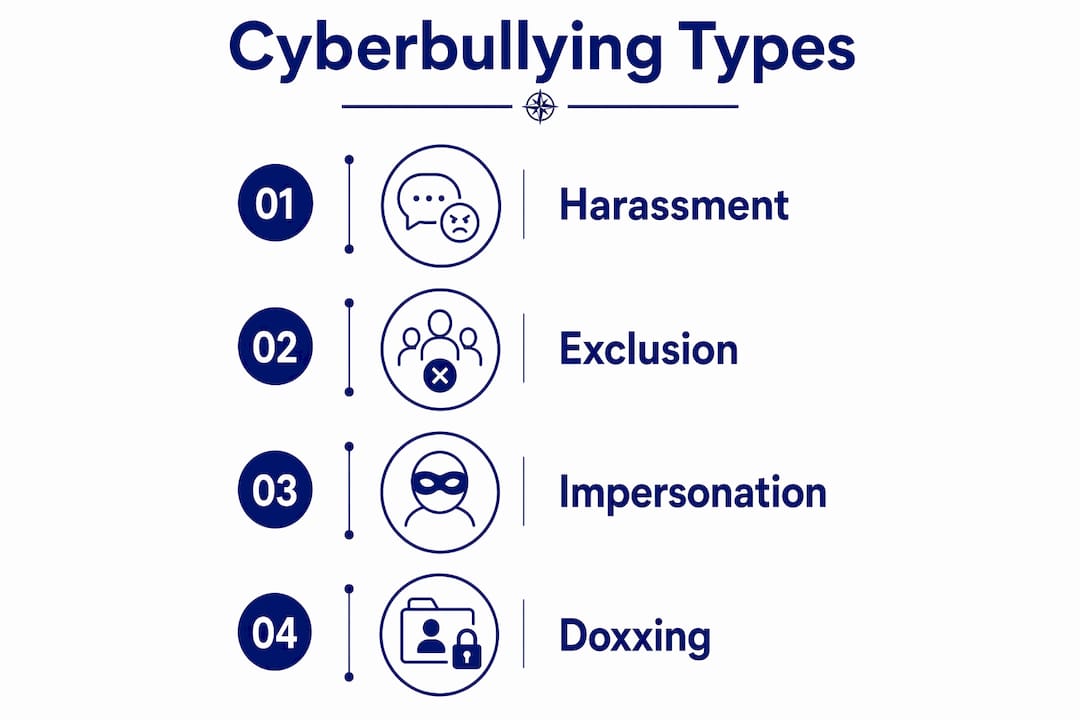
Exclusion is the form most often dismissed by adults. Being left out of a group chat or deliberately uninvited from an online game might sound minor. It is not. Exclusion can be as damaging as direct harassment, and victims frequently stay silent because they fear adults will not take it seriously. That silence prolongs the harm.
Doxxing is the form most likely to escalate into real-world danger. Publishing a child’s address, school, or daily routine online can attract threats from strangers, not just peers. Parents and educators should treat any disclosure of private information online as a serious incident.
Impersonation is particularly insidious because the victim often does not know it is happening. A fake account using their name and photo can damage friendships and reputation before the child even realises the account exists.
Pro Tip: If you suspect exclusion or impersonation, ask your child to search their own name and username on major platforms. Fake profiles and tagged posts often surface this way before the child has been directly told.
Preserving evidence matters from the moment you suspect something is wrong. Screenshots before blocking or reporting are the most important first step. Platforms may delete messages during investigations, and without that digital footprint, reports become much harder to substantiate.
What are the signs of cyberbullying in children and teens?
Children rarely announce they are being cyberbullied. Fear, shame, and the worry that adults will overreact or take away their devices all push them toward silence. Knowing what to look for matters more than waiting to be told.
Emotional signs are often the first to appear:
Increased anxiety, sadness, or irritability, particularly after using a device
Withdrawal from friends, family, and activities they previously enjoyed
Visible distress during or after phone or computer use
Sudden disinterest in school or social events
Behavioural signs follow closely:
Becoming secretive about online activity or quickly closing screens when adults approach
Reluctance to go online at all, which can signal avoidance after an incident
Unexplained changes in friendship groups or social dynamics
Refusing to discuss what is happening at school or online
Physical symptoms are real and should not be dismissed. Sleep disruption, headaches, and stomach complaints without a clear medical cause are all documented responses to sustained psychological stress. Cyberbullying leads to depression, anxiety, and in serious cases suicidal thoughts, with 1 in 4 youths in some demographics reporting being cyberbullied annually. That statistic reflects a public health concern, not just a parenting challenge.
Pro Tip: Avoid sitting your child down for a formal “talk.” Casual conversations during walks or drives are far more likely to open genuine dialogue. The side-by-side setting removes the pressure of direct eye contact and makes disclosure feel safer.
Marginalised young people, including non-binary youth, face higher risks. Targeted harassment based on identity compounds the harm and requires additional sensitivity in how adults respond.
What strategies can parents and educators use to prevent and respond to cyberbullying?
Prevention starts long before a crisis. The single most protective factor is a child who trusts the adults in their life enough to speak up. That trust is built through consistent, non-judgmental conversations about online life, not through rules and restrictions alone.
Keep communication open. Talk regularly about what your child does online, who they talk to, and how those interactions make them feel. Make it a normal part of family conversation, not a reaction to a problem.
Avoid punitive device removal as a first response. Removing devices abruptly creates a secrecy culture and teaches children that coming to you will cost them their social life. Behavioural solutions consistently outperform purely technical restrictions.
Build a village of support. Parents and educators form a network that improves digital resilience in children. Schools, counsellors, and community services each play a role. No single adult can carry this alone.
Teach digital safety as an ongoing skill. Reviewing online risks for kids with your child regularly builds awareness before problems arise. Frame it as a life skill, the same way you would road safety.
Preserve evidence before acting. Screenshot everything before blocking or reporting. Note dates, times, and platform names. This documentation is what schools, platforms, and police require to act.
Use school reporting systems. Many schools now have structured student cyber awareness workflows that guide staff through incident response. If your school does not have one, advocate for it.
Follow up consistently. A single conversation is not enough. Check in regularly, watch for returning signs, and make clear that your support does not expire after one disclosure.
The most effective responses balance evidence preservation with maintaining child trust. Those two things are not in conflict. You can document harm and still respond with warmth.
Key takeaways
Cyberbullying causes measurable psychological harm, and the most effective response combines early evidence preservation with consistent, trust-based communication between adults and children.
Point | Details |
Clear definition matters | Cyberbullying is repeated, intentional digital harassment that causes real harm to victims. |
Five recognised types | Harassment, doxxing, impersonation, exclusion, and non-consensual image sharing each require different responses. |
Signs are often hidden | Children conceal cyberbullying out of fear; watch for emotional, behavioural, and physical changes. |
Preserve evidence first | Screenshot and document before blocking or reporting, as platforms may delete content during investigations. |
Communication beats restriction | Removing devices without dialogue increases secrecy and risk; open conversation builds lasting resilience. |
What I have learned from years of watching this unfold
The thing that strikes me most, after working in this space for a long time, is how often adults respond to cyberbullying with the one action most likely to make things worse. They take the phone away. I understand the impulse. You are frightened, you want to remove the source of harm, and it feels decisive. But to a teenager, losing their device means losing their social world, their identity, and their connection to peers. It teaches them that honesty has a price.
What actually works is building the relationship before the crisis arrives. If your child knows you will not catastrophise, will not immediately punish, and will actually listen, they are far more likely to come to you early. Early disclosure changes everything. It means more evidence, more options, and less accumulated harm.
I also want to name something that does not get said enough: exclusion is real bullying. When a child is repeatedly left out of group chats or online games by peers who know exactly what they are doing, that is a deliberate act of harm. Adults who dismiss it as “just kids being kids” are missing the point entirely.
The cyberbullying prevention strategies that hold up over time are the ones grounded in behaviour and relationship, not technology and rules. Stay curious about your child’s digital life. Stay informed about where young people are spending time online. And if you are not sure where to start, reach out to people who work in this field every day.
— Jemma
How Cybercompassconsulting supports families and schools
Cybercompassconsulting works with families, schools, and organisations to build genuine digital safety cultures, not just policies on paper. The approach draws on over 35 years of experience in behavioural science and cyber wellness, which means the advice is grounded in how people actually think and behave online.
Whether you are a parent trying to start the right conversation or a school looking to build a structured response programme, Cybercompassconsulting offers tailored support. The cyber wellness school programme includes virtual consultations designed around your school community’s specific needs. Families can access personalised guidance through the families service page. The goal is always the same: fewer children suffering in silence, and more adults equipped to help.
FAQ
What is the cyberbullying definition used by safety experts?
Cyberbullying is repeated, intentional aggressive behaviour using digital devices to harm a victim who finds it difficult to defend themselves. It differs from a single online conflict because it involves a pattern of deliberate harm over time.
What are the most common examples of cyberbullying?
The five most recognised forms are harassment, doxxing, impersonation, exclusion from online groups, and non-consensual sharing of intimate images. Exclusion is the most underreported because victims fear adults will not take it seriously.
What are the effects of cyberbullying on young people?
Cyberbullying causes depression, anxiety, sleep disruption, and in serious cases suicidal ideation. Marginalised groups, including non-binary youth, face disproportionately higher risks.
How do I talk to my child about cyberbullying?
Use informal, low-pressure settings like car trips or walks rather than formal sit-down conversations. Casual, side-by-side dialogue reduces pressure and makes children more likely to disclose what is happening.
What should I do first if my child is being cyberbullied?
Take screenshots and document all evidence before blocking or reporting the bully. Platforms may remove content during investigations, so preserving the digital record is the most critical first step.
Recommended
Comments