What is human-centric cybersecurity: a 2026 guide
Human-centric cybersecurity is defined as a security approach that places people, their behaviour, and their psychology at the centre of digital defence, rather than relying solely on technical tools. More than 90% of breaches involve the human element. That single figure reframes the entire conversation. Traditional firewalls and antivirus software cannot fix a problem rooted in how people think, feel, and make decisions under pressure. This guide explains what human-focused cybersecurity means, why it matters, and how organisations and individuals can put it into practice right now.
What is human-centric cybersecurity and why does it matter?
Human-centric cybersecurity is the practice of integrating human behavioural insights into every layer of a security strategy. It treats individuals as critical assets rather than weak links. The industry also refers to this as user-centred cybersecurity, and the concept is gaining formal recognition through frameworks like ISO 27001, which now accommodates human risk factors alongside technical controls.
The importance of human-centric security becomes clear when you look at what actually causes breaches. Social engineering, phishing, and poor password habits are not software failures. They are human failures, and they require human solutions. Organisations that ignore this reality keep patching the wrong problem.

Cybercompassconsulting has built its entire practice on this principle. With over 35 years of experience, the team understands that cyber psychology is not a soft add-on to security. It is the foundation.
How does the people, process, and technology framework work?
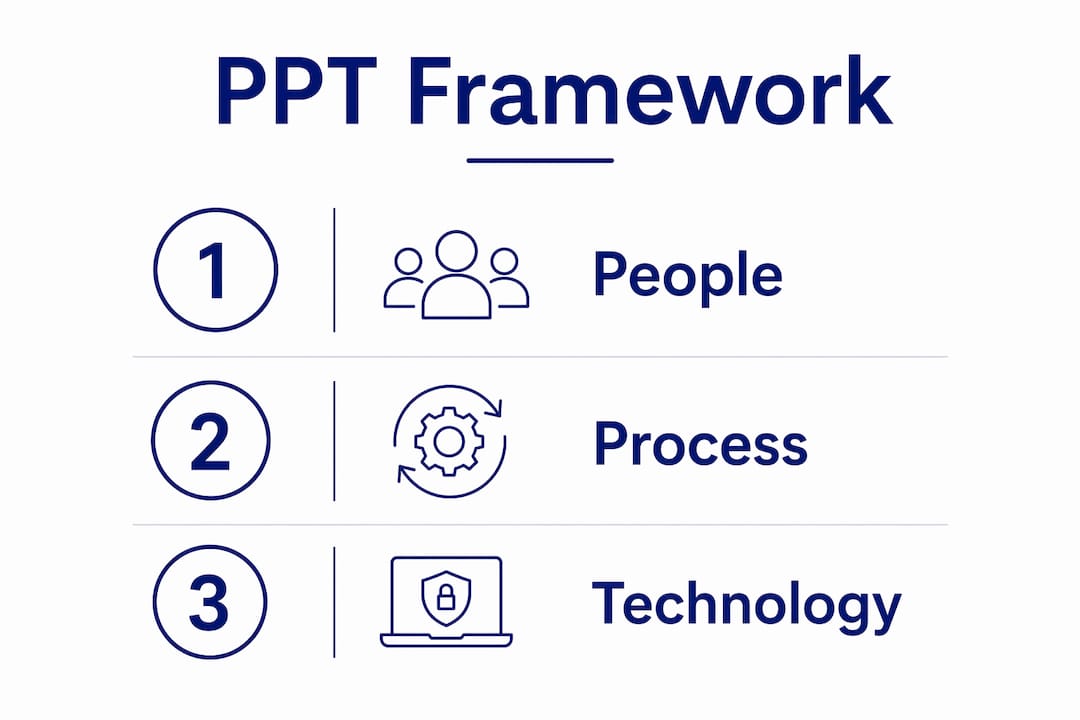
The People, Process, and Technology (PPT) framework is the structural backbone of human-centric security strategies. Each element plays a distinct role, and none of them works well in isolation.
People covers the human side: attitudes, habits, emotional responses, and organisational culture. Security culture does not emerge from a policy document. It grows from consistent behaviour, visible leadership, and psychological safety. When people feel blamed for mistakes, they hide incidents rather than report them.
Process covers the policies, workflows, and procedures that guide human behaviour. Processes must be designed around how people actually work, not how security teams wish they would work. Rigid, friction-heavy processes push people toward workarounds that create new vulnerabilities.
Technology covers the tools that support people and processes. Biometric logins and single sign-on are the most user-friendly security features available today. They reduce friction, improve compliance, and remove the cognitive load of managing dozens of passwords. The Human-Centric Risk Management (HRM) methodology takes this further by integrating socio-psychological techniques directly into ISO 27001 risk assessments, tailoring security treatments to individual user profiles.
PPT element | Primary focus | Human-centric application |
People | Behaviour and culture | Awareness training, psychological safety, empowerment |
Process | Policies and workflows | Usable procedures, proactive reporting culture |
Technology | Tools and platforms | Biometrics, single sign-on, behavioural analytics |
Pro Tip: When reviewing your security processes, ask whether a busy, stressed employee could follow them correctly at 5 PM on a Friday. If the answer is no, the process needs redesigning, not the person.
What human vulnerabilities does this approach address?
Human behaviour is the most consistently exploited attack surface in cybersecurity. A review of 41 studies confirms that focusing only on technical defences is insufficient without addressing the human layer directly. The vulnerabilities are predictable, well-documented, and addressable.
The most common human risks include:
Phishing and social engineering. Attackers exploit trust, urgency, and authority. A convincing email from a “CEO” asking for an urgent bank transfer bypasses every firewall in existence.
Security fatigue. Frequent password resets and repeated authentication demands wear people down. Fatigued users take shortcuts. Those shortcuts become vulnerabilities.
Psychological biases. Confirmation bias, authority bias, and optimism bias all affect security decisions. People click links they should not because their brain pattern-matches to something familiar.
Poor usability. When security tools are clunky or confusing, people avoid them. A security measure nobody uses provides no protection.
Lack of awareness. Many people genuinely do not know what a phishing attempt looks like, or why reusing passwords across accounts is dangerous.
Human-centric security addresses these risks through gamified awareness training, emotional intelligence programmes, and continuous feedback loops rather than annual compliance tick-boxes. Many organisations also overlook non-digital social engineering, such as tailgating into secure areas or impersonating contractors. A truly human-focused approach covers these physical and social dimensions as well.
Pro Tip: Run a simulated phishing campaign before launching any awareness training. The results will show you exactly where your people are most vulnerable, and they will make the training feel relevant rather than theoretical.
How does human-centric security differ from traditional approaches?
Traditional cybersecurity focuses on the perimeter. Firewalls, antivirus software, intrusion detection systems, and network monitoring are all designed to keep threats out. This model made sense when most work happened inside a physical office connected to a single network. That world no longer exists.
Remote work, cloud platforms, and personal devices have dissolved the perimeter. Threats now enter through email inboxes, messaging apps, and the human decisions made on those platforms every day. A technical-only defence cannot follow a person into their home office or onto their personal phone.
Human-centric models treat employees as critical assets and focus protection on people across all digital channels. The difference in mindset is significant. Traditional security asks, “How do we stop threats from getting in?” Human-centric security asks, “How do we help people make better decisions when threats inevitably reach them?”
Behavioural analytics paired with adaptive training represents the most effective integration of human and technical approaches. AI-driven platforms can analyse daily communication patterns, detect risky behaviours, and automatically deliver personalised training to high-risk individuals. This is not surveillance for its own sake. It is targeted support that arrives at the moment a person needs it most.
The benefits of human-centric cybersecurity over traditional models are clearest in decentralised and remote work environments, where perimeter-based thinking simply cannot reach.
How to implement human-centric cybersecurity in your organisation
Implementing a human-centric security posture is a cultural shift as much as a technical one. The steps below apply to organisations of any size, from small businesses to large corporations.
Assess your human risk baseline. Use a methodology like HRM to map user profiles, identify high-risk roles, and understand where human vulnerabilities are concentrated. You cannot address what you have not measured. Reducing human error starts with knowing where it originates.
Incorporate socio-psychological factors into risk management. Standard risk assessments focus on technical threats. Add adversary profiles and user behaviour patterns to your risk calculations. This gives you a far more accurate picture of your actual exposure.
Build a proactive reporting culture. Moving from a blame culture to proactive reporting is one of the strongest predictors of long-term cyber resilience. People must feel safe reporting mistakes without fear of punishment. Leadership behaviour drives this shift more than any policy.
Improve usability to reduce friction. Deploy biometrics and single sign-on wherever possible. Security fatigue caused by rigid authentication is a documented barrier to compliance. Remove unnecessary friction and compliance rates rise naturally.
Deliver tailored, continuous training. Generic annual training does not change behaviour. Continuous feedback loops and role-specific training improve outcomes far beyond one-time compliance exercises. Tailor content to department, role, and individual risk profile. Schools can apply similar principles through structured student cyber awareness programmes.
Use behavioural analytics as an early warning system. AI-driven tools that monitor communication and collaboration platforms can flag unusual behaviour before it becomes a breach. Pair these alerts with immediate, personalised training rather than punitive responses.
Review and adapt continuously. Human behaviour changes. Threat tactics evolve. A human-centric security programme that was effective last year may have gaps today. Build quarterly reviews into your security calendar and treat them as non-negotiable.
Key takeaways
Human-centric cybersecurity succeeds where technical-only defences fail because it addresses the root cause of most breaches: human behaviour, psychology, and culture.
Point | Details |
People are the primary risk | More than 90% of breaches involve the human element, making behaviour the top priority. |
PPT framework guides implementation | Balance people, process, and technology to build security that works with human behaviour. |
Usability drives compliance | Biometrics and single sign-on reduce friction and improve security habits across teams. |
Culture change is non-negotiable | Shifting from blame to proactive reporting builds long-term resilience in any organisation. |
Continuous training outperforms annual tick-boxes | Role-specific, ongoing training with feedback loops changes behaviour where generic programmes fail. |
Why I believe we have been solving cybersecurity backwards
After working in this space for a long time, I have come to a conclusion that still surprises people when I say it out loud: most organisations are not bad at cybersecurity because they lack technology. They are bad at it because they keep treating people as the problem rather than the solution.
I have sat in boardrooms where the response to a phishing incident was to send a strongly worded email to all staff. That approach does not build resilience. It builds resentment and silence. People stop reporting near-misses because they are afraid of being the next cautionary tale in the company newsletter.
The shift I have seen work, genuinely and consistently, is when leadership decides to treat security awareness as a skill to be developed rather than a rule to be enforced. That means investing in security awareness training that respects people’s intelligence, acknowledges the psychological pressures they face, and gives them practical tools rather than abstract warnings.
The organisations that get this right do not have fewer humans. They have better-supported ones. And that, in my experience, is the only defence that actually scales.
— Jemma
How Cybercompassconsulting supports your human-centric security goals
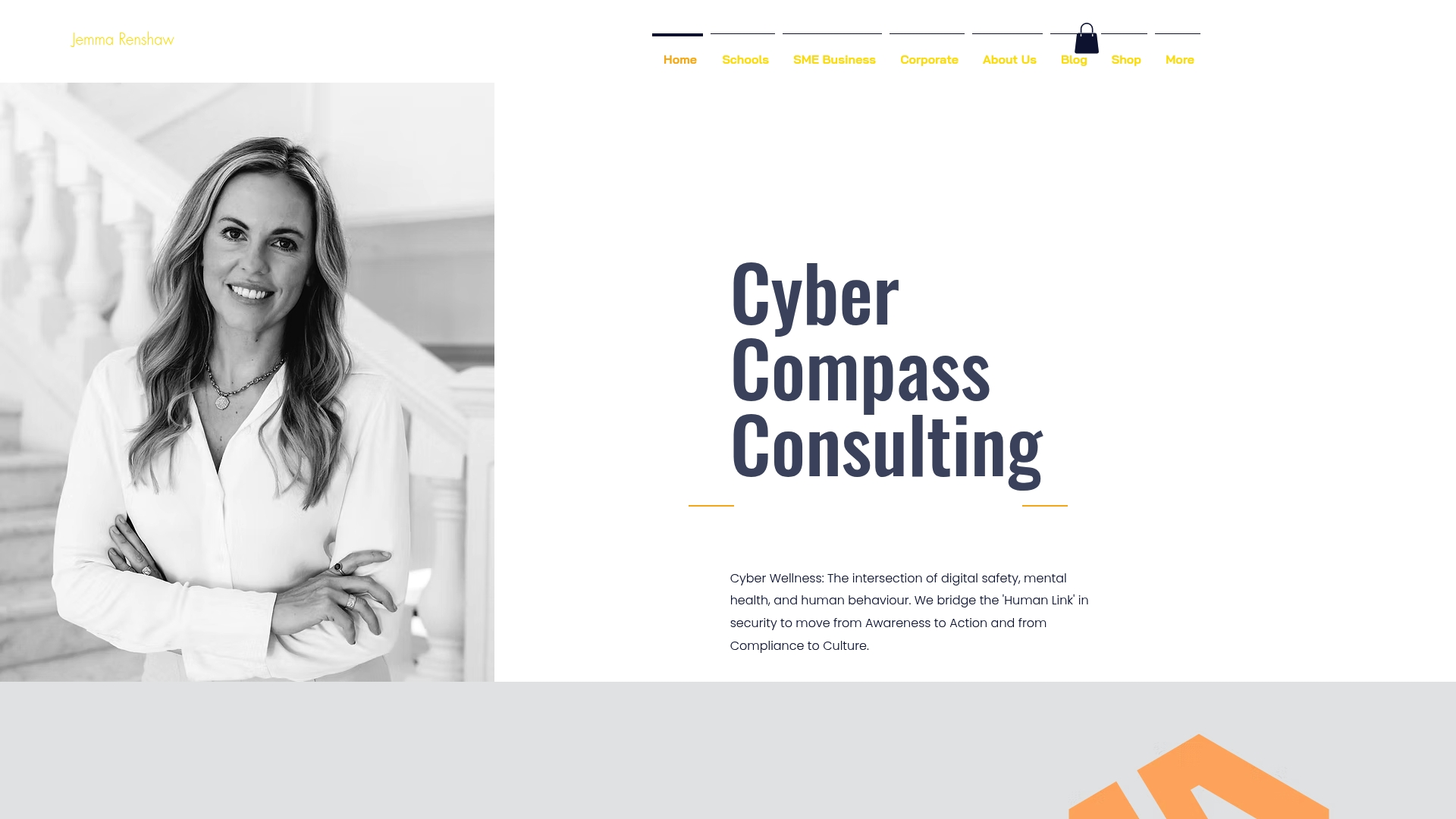
Cybercompassconsulting brings over 35 years of experience in cyber wellness and behavioural security to families, schools, and businesses across Australia. The team specialises in programmes that go beyond compliance checklists, addressing the psychological and cultural dimensions of digital safety that most technical providers overlook.
Whether you lead a small business, manage a school community, or want to build a safer digital culture for your corporate team, Cybercompassconsulting offers tailored programmes designed around how people actually behave. From SME cyber safety solutions to school-based cyber wellness consultations, the services are grounded in evidence and built for real-world environments. Visit Cybercompassconsulting to find the right programme for your organisation.
FAQ
What is human-centric cybersecurity in simple terms?
Human-centric cybersecurity is a security approach that focuses on protecting people rather than just systems. It integrates human behaviour, psychology, and usability into security strategy to address the root cause of most breaches.
Why is the human element so important in cybersecurity?
More than 90% of breaches involve the human element, which means technical defences alone cannot prevent most attacks. Addressing how people think, behave, and respond to threats is the most direct path to reducing risk.
How does human-centric security differ from traditional cybersecurity?
Traditional cybersecurity focuses on perimeter defences like firewalls and antivirus software. Human-centric security focuses on supporting people across all digital channels, using behavioural analytics and tailored training to reduce human risk.
What is the PPT framework in cybersecurity?
The People, Process, and Technology (PPT) framework structures human-centric security by balancing human behaviour, usable policies, and supportive technology. All three elements must work together for the approach to be effective.
How can organisations start implementing human-centric cybersecurity?
Organisations can start by assessing their human risk baseline using a methodology like HRM, improving usability through biometrics and single sign-on, and building a proactive reporting culture that replaces blame with empowerment.
Recommended
Comments