Top 5 whps.org Alternatives Cyber Wellness Agencies 2026

Comparing cyber wellness consulting agencies to meet school, SME, or family needs is confusing when each vendor claims its own unique solution. Most providers share little about actual pricing, curriculum scope, or technical support, so buyers have to chase details before shortlisting. This list shows core features and gaps for five alternatives to whps.org, so school leaders, managers, and parent groups can match one to their needs without guesswork.
Table of Contents
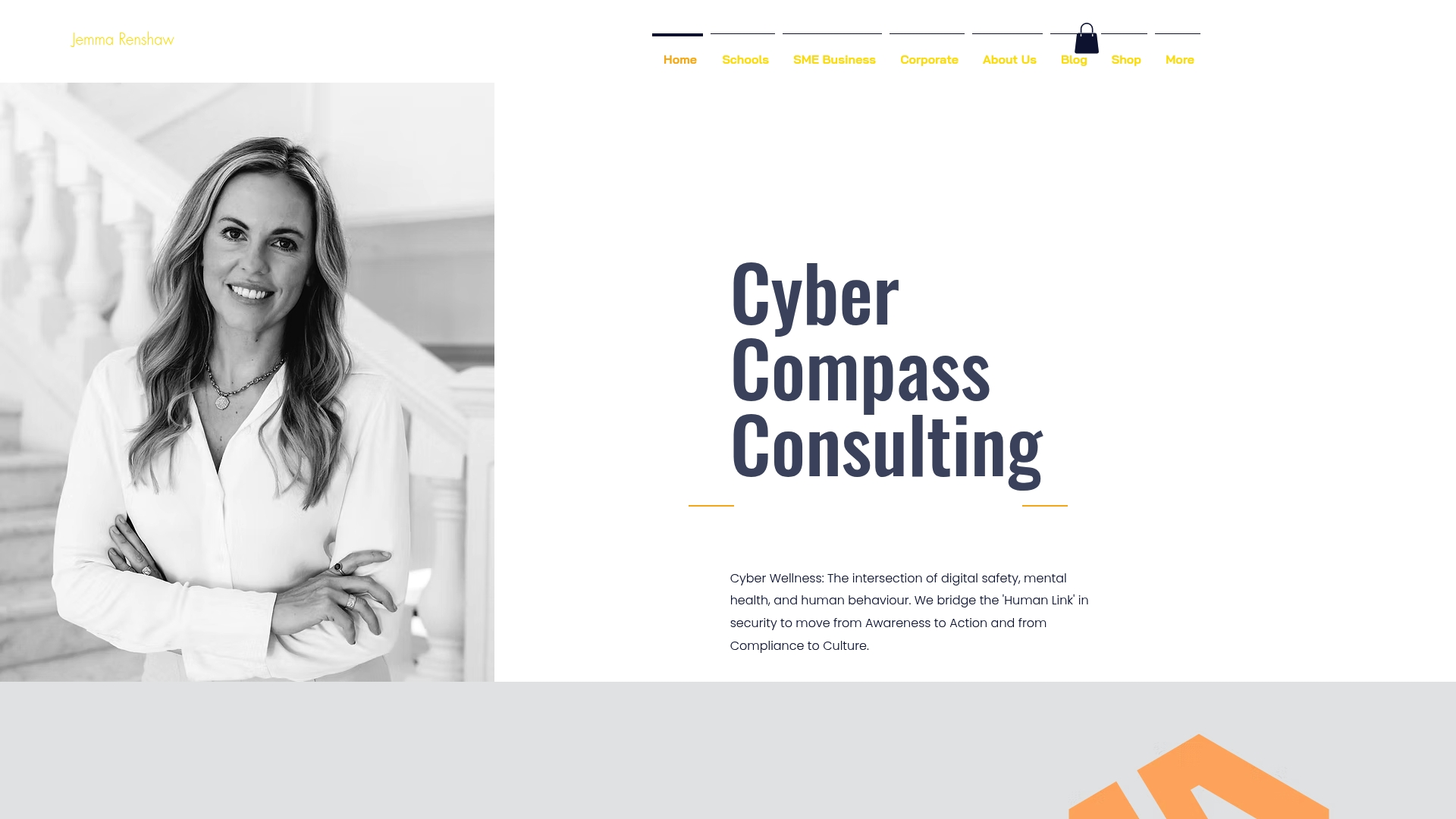
Cyber Compass Consulting
At a Glance
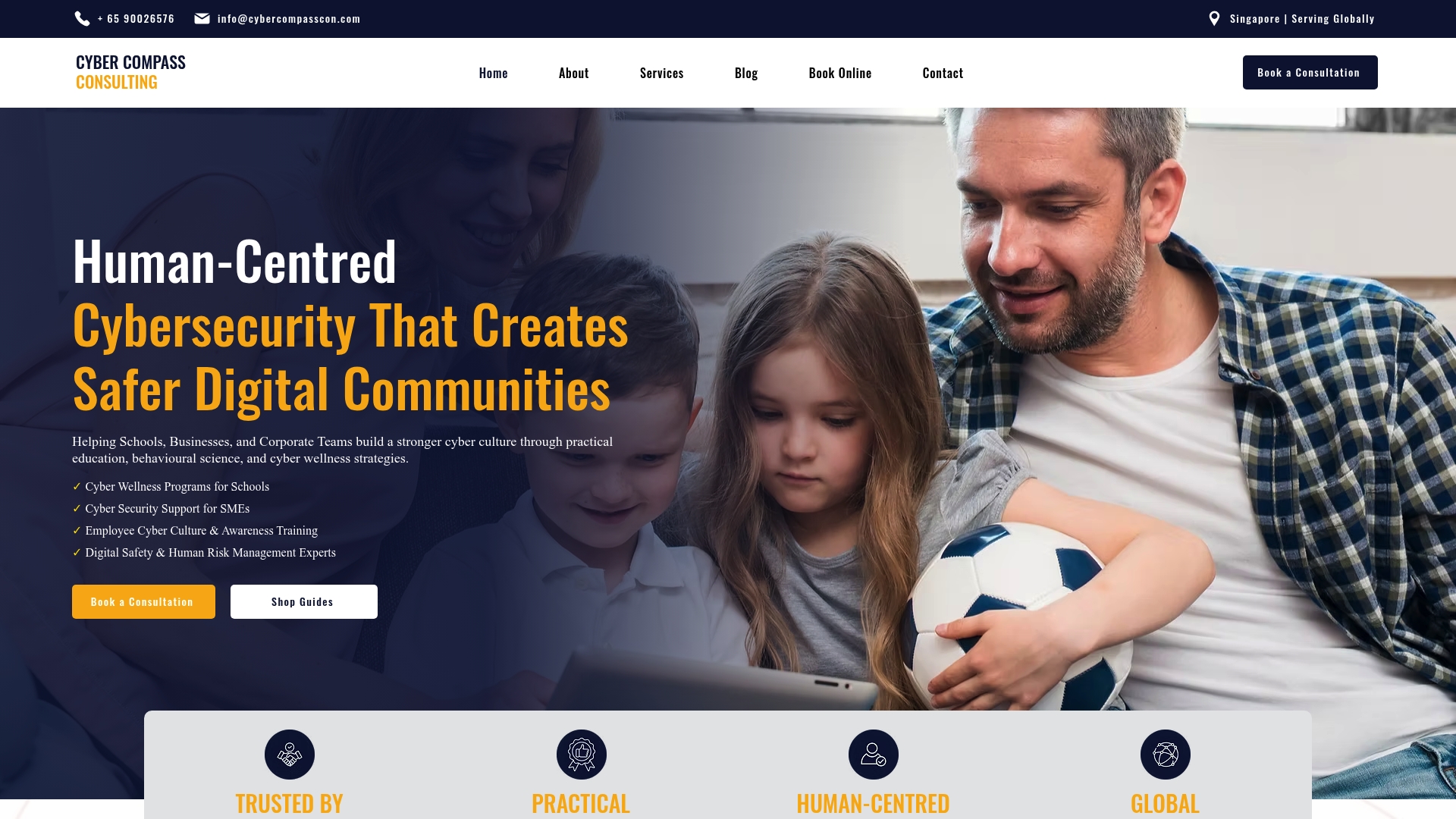
Dedicated cyber wellness programmes for schools sit alongside employee training, SME support and family coaching. The consultancy pairs classroom workshops with staff sessions and parent resources. The model focuses on changing everyday habits rather than only delivering technical checklists.
Core Features
The offering centres on Cyber Wellness programmes for schools, employee cyber culture and awareness training, and bespoke cybersecurity support for small and medium enterprises. Services include digital safety education, human risk management strategies, and personalised coaching for families, all framed by behavioural science principles.
Key Differentiator
The principal distinction is a human-centred, behavioural science-driven approach that targets culture change rather than single training events. Programmes emphasise habitual practice and social norms inside school communities and workplaces. That emphasis aims to make safer behaviour the default for staff, students and households.
Pros
The vendor advertises over 35 years of experience, which explains a long-run orientation to training and policy design. Practical, behaviour-based education reduces repetition of common human errors through simple routines and group norms. Tailored programmes adapt material to school leaders, IT coordinators and SME teams so sessions fit daily workflows. Global training experience is claimed, which helps when a school or organisation wants an outside perspective rather than an in-house fix.
Cons
Limited online detailed product features and pricing information available, which makes self-serve evaluation difficult.
Who It’s For
School communities, wellbeing leads and IT coordinators who want a structured programme for students, parents and staff. Small and medium enterprise managers seeking behaviour-focused security training will also find the approach relevant. Families wanting practical support for digital wellbeing will get coaching and tools rather than software.
Unique Value Proposition
Tailored workshops and personalised coaching link behavioural science directly to everyday device habits. That specific focus shifts effort from compliance tick-boxes to routines people can sustain at home and at work. Organisations that want fewer repeated human errors and clearer social norms will find the workflow change sensible and measurable in day-to-day practices.
Real World Use Case
A secondary school commissions a term-long programme that runs classroom lessons, parent evenings and staff training modules. Teachers receive short classroom activities and staff get role-specific exercises that reduce risky online behaviour. The school reports smoother incident handling after staff and families adopt the recommended routines.
Website: https://cybercompassconsulting.com
Cyber Safety Consulting
At a Glance
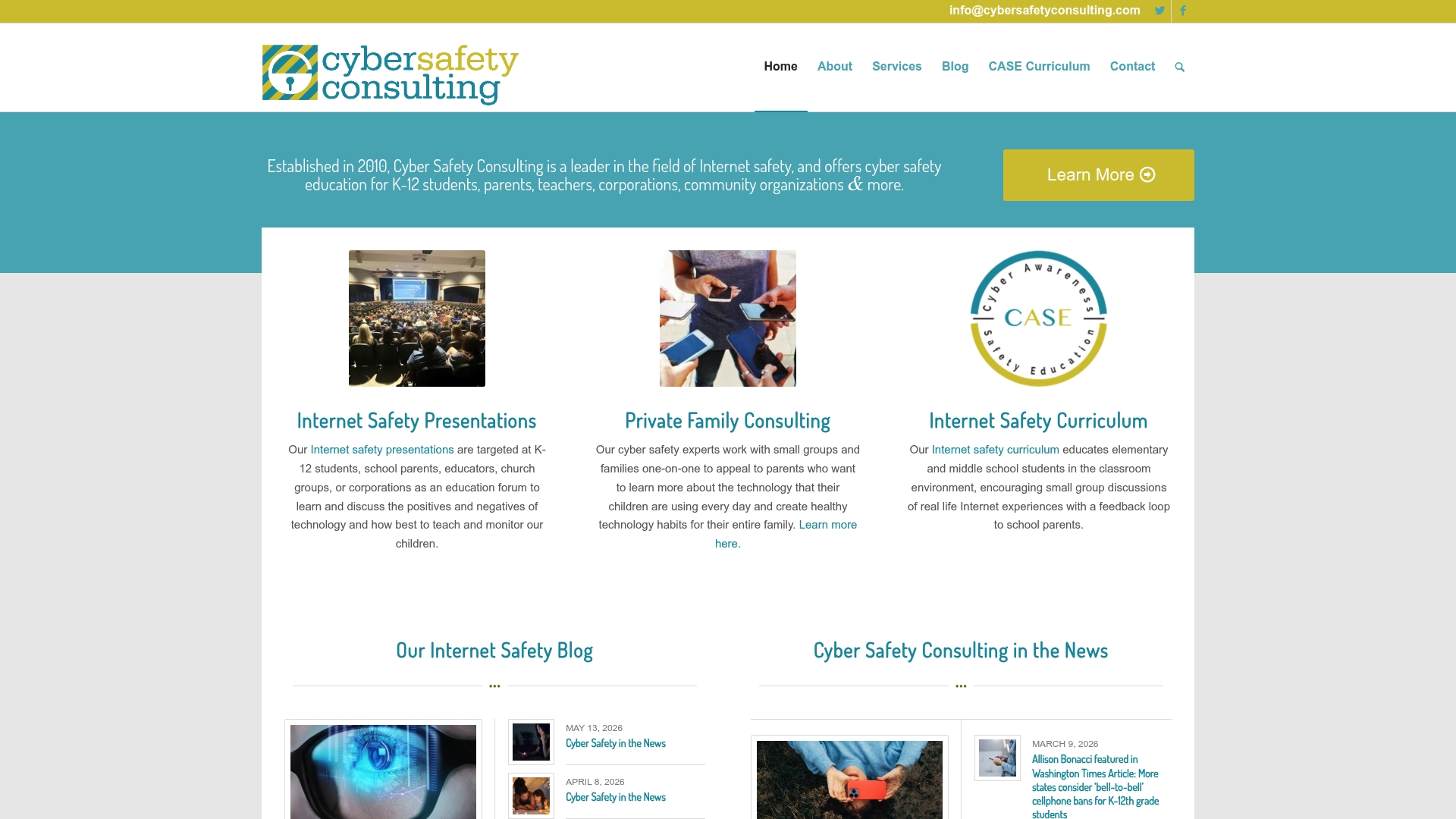
Their programmes combine classroom-ready curriculum for elementary and middle schools with private family consulting and educator training. The mix of presentations, small group workshops, and school policy support gives communities several entry points for internet safety education. That breadth suits districts wanting coordinated K-12 work alongside parent and staff engagement.
Core Features
Cyber Safety Consulting runs internet safety presentations for schools, parents, and organisations, and delivers a classroom cyber safety curriculum tailored to elementary and middle years. They offer private family consulting plus small group workshops and training sessions for teachers and staff. The services aim to link classroom lessons, staff professional development, and parental guidance so programmes reinforce each other across school and home.
Key Differentiator
The standout is the combination of a research-informed curriculum with community-facing activities. That pairing lets schools adopt a single syllabus while using presentations and workshops to bring the material to parents and staff. The approach prioritises practical understanding and behaviour change rather than only giving technical checklists.
Pros
The team brings national recognition and visible experience in school settings, which helps when negotiating district schedules and parent nights. Their materials adapt to age groups, so classroom activities and parent sessions feel relatable and not patronising. They supply practical policy support and teacher training that align with classroom lessons, making it easier to follow up on issues that surface during assemblies. Schools that run both curricula and staff workshops get tighter alignment between lesson content and school policy.
Cons
Pricing details are not published, so budgets require direct contact and scope clarification.
The offering focuses on education and training rather than on cybersecurity software or technical tools.
Buyers should confirm specific curriculum fit and scope by consulting with the team before committing.
When It May Not Fit
If you need a technical security toolset or incident response capability, this service will not meet that need. If your priority is automated monitoring, logging, or software‑based filtering, look elsewhere. Also, very large districts with complex procurement rules may need a written scope and multiple pilot sessions before scaling.
Who It’s For
Schools, principals, and school boards that want a coordinated K-12 programme and parent outreach will find this useful. Parents seeking one-to-one guidance on family device rules and educators needing practical classroom-ready lessons will also benefit. Community groups running youth programmes can use the workshops for short-term training and awareness.
Real World Use Case
A school district adopts the CASE internet safety curriculum across elementary and middle schools while scheduling teacher professional development days. Parent evenings run the same themes as classroom units so families can practise the same strategies at home. That alignment reduces confusion when students report online harm and helps staff respond consistently.
Pricing
Cyber Safety Consulting lists pricing as contact only and asks organisations to request a proposal. Expect quotes to vary by school size, number of workshops, and whether the engagement includes curriculum licensing, parent nights, or ongoing consulting.
Website: https://cybersafetyconsulting.com
KII Consulting
At a Glance
KII Consulting reports a 100% client satisfaction rating in the US and Canada. The firm combines more than 17 years of experience with a carrier neutral approach to cyber insurance and identity protection. Its model centres on high touch, consultative engagements for private clients and organisations.
Core Features
KII Consulting delivers customised cyber wellness solutions aligned to an organisation’s goals, with particular depth in identity protection and cyber insurance review. The team runs training and workshops to raise staff awareness and works through risk mitigation strategies with executive protection options for private clients. Support covers assessment through ongoing growth phases, with an emphasis on tailored advice rather than off the shelf packages.
Key Differentiator
The standout is the high touch, customised consulting model combined with carrier neutral recommendations. That mix lets the team prioritise client fit over vendor relationships, which suits complex asset protection cases. The focus on high net worth clients and private executive protection is a clear specialisation.
Pros
The team brings more than 17 years of experience in cyber wellness and privacy management, which shows in methodical assessments and practical training. Their carrier neutral stance helps when comparing insurance offerings and reduces vendor bias. End to end support from assessment through growth phases makes the engagement easier for organisations that want a long term partner. That 100% satisfaction figure speaks to strong client relationships, according to the company.
Cons
Premium, white glove services mean higher fees than basic market options, and those costs may rule out tighter budgets.
Offerings can feel complex for small organisations without in house security capacity to act on recommendations.
Heavy focus on high net worth clients may leave smaller businesses seeking simpler, lower cost packages underserved.
When It May Not Fit
Organisations that need low cost, out of the box tools will find this approach ill suited. Small teams that want self service software rather than consultative guidance will likely find implementation effort high. Buyers seeking fixed price packages for simple compliance checks should look elsewhere.
Who It’s For
This service fits organisations and high net worth individuals who need tailored cyber wellness and identity protection solutions. It suits credit unions, private offices, law firms, and wealth managers that require advisory level support. It also fits teams that plan to act on detailed recommendations with ongoing vendor advice.
Real World Use Case
A credit union engaged KII Consulting to design an identity protection programme for staff and members. The engagement included risk assessment, staff workshops, and an insurance review. Reported outcomes were improved security awareness and fewer fraud incidents in member accounts.
Pricing
KII lists pricing as not applicable for public display. There is no published fee schedule; services are quoted per engagement and tailored to scope and client profile. Prospective clients need to request a proposal to receive pricing details.
Website: https://kiiconsulting.com
Cyberlite

At a Glance
Free, curriculum-aligned classroom resources and published books anchor Cyberlite’s outreach across the Asia-Pacific region. The site pairs classroom materials with workshops and community events aimed at digital resilience for young people. That focus makes it a practical toolkit for schools and community groups rather than a commercial software vendor.
Core Features
Cyberlite supplies curriculum frameworks, downloadable lesson plans, and print resources such as posters and quizzes, all designed for classroom use. The organisation runs educator workshops and parent training sessions, and it publishes toolkits and books that explain AI safety and online wellbeing in accessible language. Partnership programmes connect schools and community groups with regional initiatives and government stakeholders.
Key Differentiator
The strongest defining feature is the regional focus on Asia-Pacific schools and communities paired with free curriculum materials. Cyberlite concentrates on classroom adoption and community outreach instead of selling digital products. That local emphasis helps tailor resources to cultural and policy differences across jurisdictions.
Pros
Cyberlite offers genuinely free, classroom-ready materials that teachers can adapt quickly to lesson plans. The mix of printed books, activity packs, and workshop formats makes it easy to run a single lesson or a whole-day event. Collaboration with organisations such as Palo Alto Networks and Microsoft supports the AI safety content and raises the initiative’s public profile, which helps with school uptake and community events.
Cons
Content access appears intermittent; some pages return errors or become temporarily unavailable. This affects lesson planning on short notice.
The offering is primarily educational and community-focused, so there are no commercial software tools or managed services for continuous monitoring.
The site lists many resources but does not present a clearly versioned curriculum or software features for digital delivery.
When It May Not Fit
If you need a managed platform for device management, filtering, or ongoing monitoring, Cyberlite will not meet that need. Organisations seeking software solutions or paid platforms with dashboards and analytics should look elsewhere. Schools that require guaranteed 24 hour access to materials may find the intermittent availability problematic.
Who It’s For
Educators, parents, and community leaders in Asia-Pacific who run classroom lessons or local awareness campaigns will find the resources useful. Policymakers and non-government organisations wanting to run community workshops or produce localised materials will also benefit. The content suits those prioritising education and outreach over technical controls.
Real World Use Case
A primary school adopts Cyberlite lesson plans for a term module on online safety, uses the activity packs in classrooms, and invites a facilitator for a half-day workshop. Teachers hand out posters and run quizzes that match the curriculum framework. The regional partnership materials help the school secure a local community venue for a parent information evening.
Website: https://cyberlite.org
Digital Wellness Institute
At a Glance
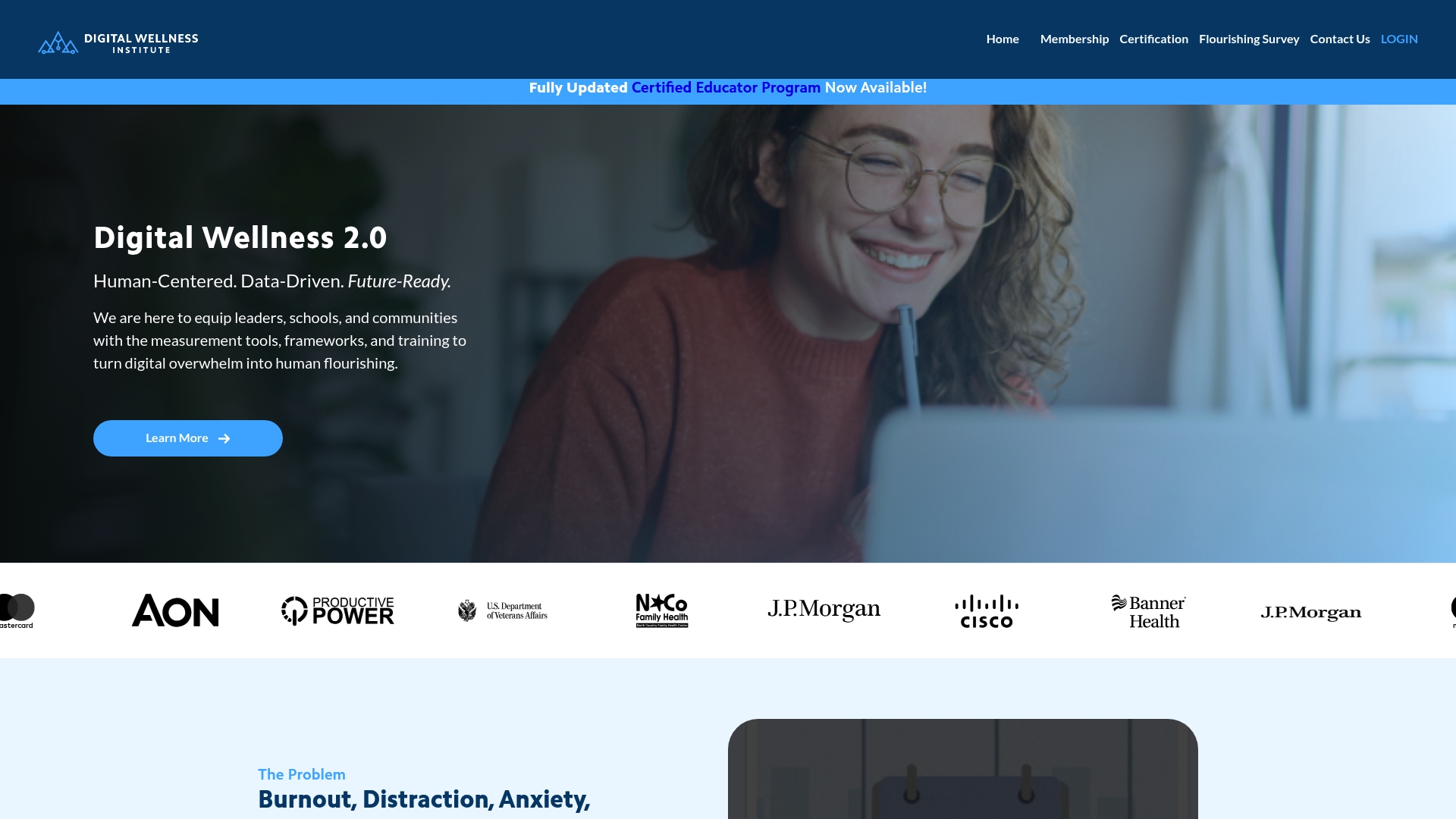
Digital Wellness Institute reports a $1,699 fee for the Digital Wellness Educator certification. The vendor states membership options start at $99 per person, with volume discounts for organisations. The offering combines measurement, training, and research into a single education pathway for digital wellbeing.
Core Features
The product bundles science based measurement tools and assessment surveys that measure digital thriving at individual and organisational levels. It pairs those instruments with professional certification programmes and a library of courses, webinars, and toolkits built around models such as Digital Flourishing® and Digital Balance™. The materials aim to translate research into classroom and workplace practise.
Key Differentiator
The institute advertises a scientifically validated Digital Flourishing® survey that sits alongside formal educator certification and research backed frameworks. That combination makes the offering more training plus measurement than a single course. It targets change at the cultural and programmatic level rather than quick skill refreshes.
Pros
The approach is research backed and oriented toward measurable outcomes, which helps teams move from vague policies to assessable programmes. There is a wide range of resources and training for different audiences, from individual learners to school staff and corporate teams, and a global community of certified educators supports ongoing peer learning. Partnerships with industry players add credibility to the curriculum and to organisational implementations.
Cons
Cost may restrict access for small organisations or individuals. That fee for certification and membership costs presents a clear barrier for budget constrained buyers.
The breadth and depth of programmes can feel overwhelming for teams wanting a rapid, lightweight fix.
The offering lists limited detail on specific software features or platform capabilities, which complicates procurement where technical integrations matter.
When It May Not Fit
If you need a simple plug and play tool to block distraction, this programme will not match that need. Small teams with tight budgets will likely find that fee hard to justify. Organisations that require detailed platform integrations or a short pilot with immediate reporting may prefer a lighter, software first solution. buyers seeking single session training rather than a multi stage programme should look elsewhere.
Who It’s For
This suit fits organisations, educators, health professionals, and consultants committed to science based digital wellbeing. It serves those building long term culture change and measurement into training plans. Individuals seeking deep professional certification also find a clear pathway here.
Real World Use Case
A multinational firm runs the Digital Flourishing® survey across several regions to map employee wellbeing. The company then enrols HR and learning staff in the educator certification to design local programmes. Over time the firm uses survey follow ups to track shifts in digital balance and to justify programme investment.
Pricing
The core Digital Wellness Educator certification carries that certification fee of $1,699. Membership options start at $99 per person, with volume discounts available for larger organisations. Exact membership tiers and organisational pricing require direct contact with the institute.
Website: https://digitalwellnessinstitute.com
Comparison of alternatives
Cyber wellness consultation services differ in their approaches, each providing targeted assistance to varied demographics and needs. By analysing the available options, clients can choose the service that aligns most closely with their priorities in digital safety education, behavioural change promotion, and organisational cybersecurity.
Approaches to education and behavioural change
Cyber Compass Consulting employs a behavioural science-driven model for fostering habitual cybersecurity practices in schools, workplaces, and families. This approach is distinct in its focus on embedding long-lasting cultural changes within communities by addressing daily and systemic practices. In comparison, Cyber Safety Consulting also includes tailored curriculum and professional training but primarily emphasises classroom and family learning without strongly targeting habitual improvements. Depending on the depth and focus of intervention desired—whether more in habitual behaviours or in structured curriculum—users may find one service more appropriate than the other.
Free and paid resource accessibility
Among the providers reviewed, Cyberlite stands out for its free-to-access curriculum frameworks and education materials. Unlike Cyber Compass Consulting and its tailored behavioural workshops, this offering focuses on immediate adoption at no cost and suits schools or communities with budget constraints. However, its intermittent content access might introduce limitations for consistent long-term use.
Best fit
Organisations such as schools and SMEs prioritising long-term sustainable behaviour change in cybersecurity practices will find Cyber Compass Consulting well-suited due to its tailored programmes underpinned by behavioural science.
Administrators in the K-12 education system needing structured, professional-grade curricula and parent-teacher engagement can significantly benefit from the offerings by Cyber Safety Consulting.
Wealth management firms or other high-net-worth organisations requiring premium bespoke guidance in cybersecurity strategy should consider KII Consulting.
Educators and community organisations seeking budget-friendly, ready-to-use lesson plans and workshops for immediate integration should explore resources from Cyberlite.
Professionals seeking certification in digital wellness education for corporate or educational applications may find the Digital Wellness Institute a fitting choice.
Our pick
For organisations and individuals aiming to successfully integrate long-term behavioural changes into their practices with the support of focused community engagement, Cyber Compass Consulting emerges as a strong choice. Its unique application of behavioural science ensures tailored and practical guidance, contributing to measurable positive outcomes in digital safety. However, those seeking zero-cost options or distinct training specialisation might explore alternatives better fitting their focused requirements.
The following table compares notable cyber wellness consulting services, highlighting their key features and audiences.
Consulting Service | Core Offering | Key Differentiator | Best For | Pricing | Notable Limitation |
Cybercompassconsulting | School and SME-tailored cyber wellness programmes | Behavioural-science-focused habit change | Schools, SMEs, and families | Price not published | Limited information available for self-assessment |
Cyber Safety Consulting | Cyber safety curriculum and family consulting | Integrates community outreach with curriculum | School districts and community groups | Price not published | Focus on education excludes technical cybersecurity tools |
KII Consulting | Identity protection and cyber insurance | Carrier-neutral, high-touch consulting | High-net-worth clients and private sectors | Price not published | Higher fees due to premium service model |
Cyberlite | Free classroom resources and workshops | Asia-Pacific regional focus with free content | Schools and educators in Asia-Pacific | Freely available | Limited availability of specific resources online |
Digital Wellness Institute | Digital wellbeing training certification | Scientifically validated survey tools | Organisations building cultural change | $1,699 for certification | High cost may limit accessibility for small teams |
Challenges Schools And SMEs Face With Cyber Wellness Solutions
Many school communities and small-medium enterprise managers struggle with training that focuses on technical checklists rather than everyday behaviours. This often leaves students, staff, and families repeating the same human errors online and feeling frustrated by generic advice that does not fit their daily routines. Cybercompassconsulting specialises in creating cyber wellness programmes that apply behavioural science to help change habits across schools, workplaces, and households.
If you seek a cyber wellness approach that goes beyond compliance tick-boxes and fits your specific needs, Cybercompassconsulting offers tailored workshops and personalised coaching. These services promote safer practices through habitual workflows and social norms, reducing risk and technostress. Visit Cybercompassconsulting to find out how to integrate practical cyber safety strategies into your school or SME environment and book a session that includes staff, students, and families.
FAQ
How does Cybercompassconsulting support behavioural change in schools?
Cybercompassconsulting offers tailored cyber wellness programmes that focus on habitual practice and social norms within educational communities. Its approach integrates behavioural science principles, ensuring that staff, students, and families adopt safer online behaviours as the norm. Schools seeking a shift in digital culture should consider contacting them for more information on their programmes.
What is the difference between Cybercompassconsulting and Cyber Safety Consulting?
Cyber Safety Consulting provides a research-informed curriculum that includes internet safety presentations and parent engagement sessions, making it suitable for districts seeking a coordinated K-12 programme. In contrast, Cybercompassconsulting’s focus on behavioural science prioritises long-term habitual change, which is ideal for organisations wanting to embed cyber wellness into daily practices. Each option serves distinct educational needs.
Can I use Cybercompassconsulting for family coaching on digital wellbeing?
Cybercompassconsulting offers personalised coaching for families, focusing on practical support for digital wellness and behaviour modification. This service integrates tailored strategies that families can implement, making it a fitting choice for those looking for hands-on guidance.
How does Cyber Safety Consulting’s curriculum adapt to different age groups?
Cyber Safety Consulting provides age-specific content that resonates with elementary and middle school students, ensuring lessons are relatable and appropriate. Schools that require this tailored approach can effectively engage different age groups while reinforcing cyber safety across their curriculum.
How does Cybercompassconsulting reduce common human errors?
Cybercompassconsulting implements behaviour-based education designed to establish simple routines and group norms, which help minimise repeated human errors. Institutions looking to tackle online risks should definitely explore their tailored workshops that aim to foster safer habits.
Recommended
Comments