Why protect student data: a guide for schools in 2026
Student data deserves protection because the consequences of mishandling it can follow a child for life. A leaked health record, a disclosed learning difficulty, or an exposed home address are not abstract risks. They translate into identity theft, discrimination, and lost opportunities that a young person cannot yet anticipate or defend against. Here is what every parent, educator, and school administrator needs to understand about why student data security matters, and what to do about it.
The core reasons protecting student information is urgent:
Students cannot assess long-term risks like identity theft or reputational harm from early data exposure
Misused data can affect future employment, insurance, and social relationships
Schools hold a legal and ethical duty of care over the information they collect
Unprotected data erodes trust between families and educational institutions
Equitable education depends on data being used fairly, not to label or limit students
Key principles that should guide student data protection
Good data protection in schools is not a checklist. It is a set of values that shape every decision about what information gets collected, who sees it, and why.
Collect only what is necessary. Every additional data point is an additional risk. Schools should ask whether each piece of information genuinely serves a learning purpose before collecting it.
Be transparent. Students and parents deserve to know what data is held, how it is used, and who can access it. Opacity breeds distrust.
Use data solely for education. Data-driven teaching can improve outcomes, but only when information stays within its intended educational purpose and never drifts toward commercial use.
Treat all students equitably. Data practices must not disadvantage vulnerable groups, including students with disabilities, those from low-income families, or those from culturally and linguistically diverse backgrounds.
Build security into every system. Privacy safeguards and technical security measures work together. One without the other leaves gaps.
Best practices for safeguarding student data privacy and security
Schools that take protecting student information seriously do not wait for a breach to act. They build protection into their everyday operations.
Develop a clear data governance policy that defines what data is collected, who is authorised to access it, how long it is retained, and when it must be deleted.
Vet every app and platform before use. The rise of education technology has brought a parallel rise in privacy risks. Maintain an approved-app list and require staff to check it before introducing new tools to students.
Train staff regularly. Educators are often the first line of defence. Training on phishing, password hygiene, and data handling reduces the human error that causes most breaches.
Communicate openly with families. Parents should receive plain-language explanations of what data the school collects and why, not buried legal notices.
Limit access by role. Not every staff member needs access to every record. Role-based access controls mean a classroom teacher sees what they need, and nothing more.
Encrypt sensitive records and require multi-factor authentication for any system holding personally identifiable information.
Pro Tip: Regularly review your school’s approved-app list to ensure current apps meet your privacy standards. Apps update their privacy policies quietly, and a tool that was safe last year may no longer meet your standards today.
What happens when schools fail to protect student data
The consequences of poor data protection are not hypothetical. They are personal, legal, and lasting.
Students face real harm. Identity theft, cyberbullying fuelled by leaked personal details, and discrimination based on disclosed health or behavioural records all cause genuine damage to young people’s lives.
Excessive surveillance backfires. Over-monitoring students can suppress creativity, reduce autonomy, and damage the trust that learning depends on. Security measures must be proportionate.
Schools face legal penalties. In Australia, breaches of the Privacy Act 1988 can result in regulatory action by the Office of the Australian Information Commissioner (OAIC). Reputational damage often follows quickly.
Families disengage. When parents lose confidence in a school’s ability to protect their child’s information, they become less willing to share information that could genuinely help that child.
Data, once released, cannot be fully recalled. This is not a technical problem with a technical fix. It is a permanent consequence of a preventable failure.
How parents, educators, and administrators each play a role
Protecting student data is not the job of one person or one department. It requires a shared culture, built deliberately.
School leaders set the tone. They establish policies, allocate resources for training, and hold the institution accountable for its data practices. Without leadership commitment, privacy remains a low priority.
Educators practise what they are taught. They check whether an app is approved before using it, handle student records with discretion, and model responsible digital behaviour for the students watching them.
Parents exercise their rights. Understanding what data the school holds, asking questions, and opting out of non-essential data collection are all legitimate and encouraged. Parents and students who understand their privacy rights are far better placed to advocate for protection.
Students develop digital citizenship. Learning to manage personal information safely, recognising when something feels wrong, and knowing who to tell are skills that serve young people well beyond the classroom.
When these groups work together around shared expectations, privacy becomes part of the school’s culture rather than an afterthought.
Ethical and equitable use of student data in Australian schools
Privacy in education is not just a legal obligation. It is a matter of fairness, and the stakes are higher than most people realise.
Ethics go beyond compliance. Meeting the minimum legal standard is not the same as treating students with dignity. Schools should ask not only “are we allowed to collect this?” but “should we?”
Vulnerable students carry greater risk. Students with disability, those in out-of-home care, and those from marginalised communities face higher risk of harm when their data is misused. Equity-focused data governance actively protects these groups.
Audit data use regularly. Policies mean little without review. Schools should periodically examine who is accessing what data and whether that access still serves a legitimate educational purpose.
AI introduces new risks. Automated decision-making tools used in education, from behaviour monitoring to learning analytics, can embed bias and produce inequitable outcomes. The integration of AI in schools demands robust policy review before deployment, not after.
Student agency matters. Young people should understand what data is held about them and have meaningful input into how it is used. Transparency is not just good practice; it builds the kind of trust that makes education work.
Privacy is a core component of educational fairness. Good data practices support equitable student success rather than acting as a bureaucratic hurdle.
The legal framework governing student data in Australia
Australia’s primary legislation covering student data is the Privacy Act 1988 (Cth), which includes the Australian Privacy Principles (APPs). These principles govern how schools, particularly non-government schools and government agencies in some states, collect, store, use, and disclose personal information. The OAIC enforces compliance and can investigate complaints from families.
State and territory education departments add further obligations. Victoria’s Department of Education, for example, maintains a schools privacy policy that binds government schools to specific data handling standards. The Children’s Online Privacy Protection Act (COPPA) in the United States applies to many of the American-based platforms Australian schools use, meaning schools must understand both domestic and international obligations when selecting technology.
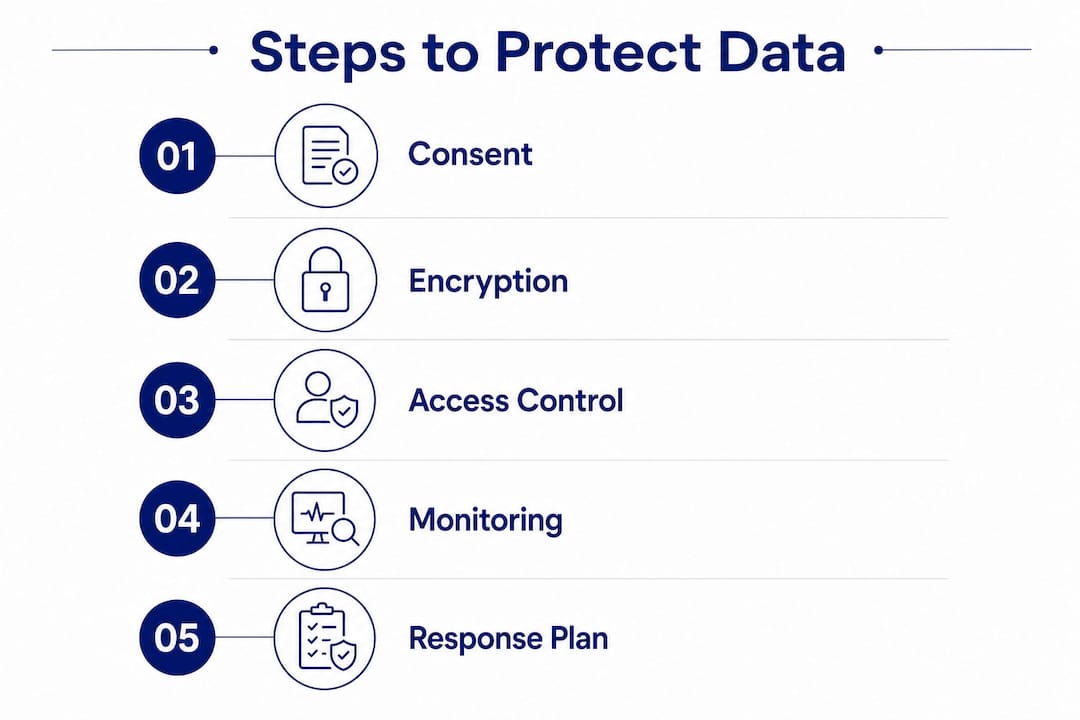
The key practical requirement across all frameworks is consent. Schools must obtain informed consent before collecting sensitive information, explain the purpose clearly, and not use data beyond that stated purpose.
Technological tools and security measures that protect student records
Technology creates risk, but it also provides the tools to manage it. Schools that take data security seriously deploy layered defences rather than relying on a single control.

Encryption protects data in transit and at rest, so that intercepted information is unreadable without the correct key. Multi-factor authentication (MFA) adds a second verification step that stops most unauthorised logins even when a password is compromised. Role-based access controls ensure staff see only the records relevant to their function. Regular software patching closes the vulnerabilities that attackers exploit most often. For schools building or reviewing their cyber awareness approach, a structured workflow that covers both technical controls and staff behaviour is the most effective starting point.
How to respond when a student data breach occurs
A breach is not a question of if but when, and schools that have a plan respond faster and cause less harm.
The immediate priority is containment: identify what data was exposed, cut off further access, and preserve evidence. Notify the school principal and data protection lead within hours, not days. Under the Privacy Act 1988, the Notifiable Data Breaches (NDB) scheme requires organisations to notify the OAIC and affected individuals when a breach is likely to cause serious harm. Schools must assess this quickly and act accordingly.
Communicate with affected families honestly and promptly. Vague or delayed communication amplifies distrust. Document every step taken, both for regulatory purposes and to improve the school’s response next time. After containment, conduct a post-incident review to identify the root cause and close the gap that allowed the breach to occur.
Key takeaways
Protecting student data is an ongoing ethical responsibility, not a one-off compliance task, and once data is released it cannot be fully retracted.
Point | Details |
Students cannot self-protect | Young people cannot assess long-term risks from data exposure, so schools must act on their behalf. |
Collect only what is needed | Limiting data collection reduces risk and signals respect for student privacy. |
Legal obligations are real | Australia’s Privacy Act 1988 and state-level policies impose enforceable duties on schools. |
Vulnerable students need more protection | Students from marginalised groups face higher harm from data misuse and require targeted safeguards. |
Breach response must be planned | Schools with a documented incident response plan contain breaches faster and notify families sooner. |
If your school is ready to move from awareness to action, Cybercompassconsulting offers a cyber wellness school programme designed specifically for Australian school communities. Grounded in behavioural science and over 35 years of experience, the programme helps schools build genuine data protection cultures, not just policy documents.
Recommended
Comments